1. Introduction: Breaking the Carriage Mold
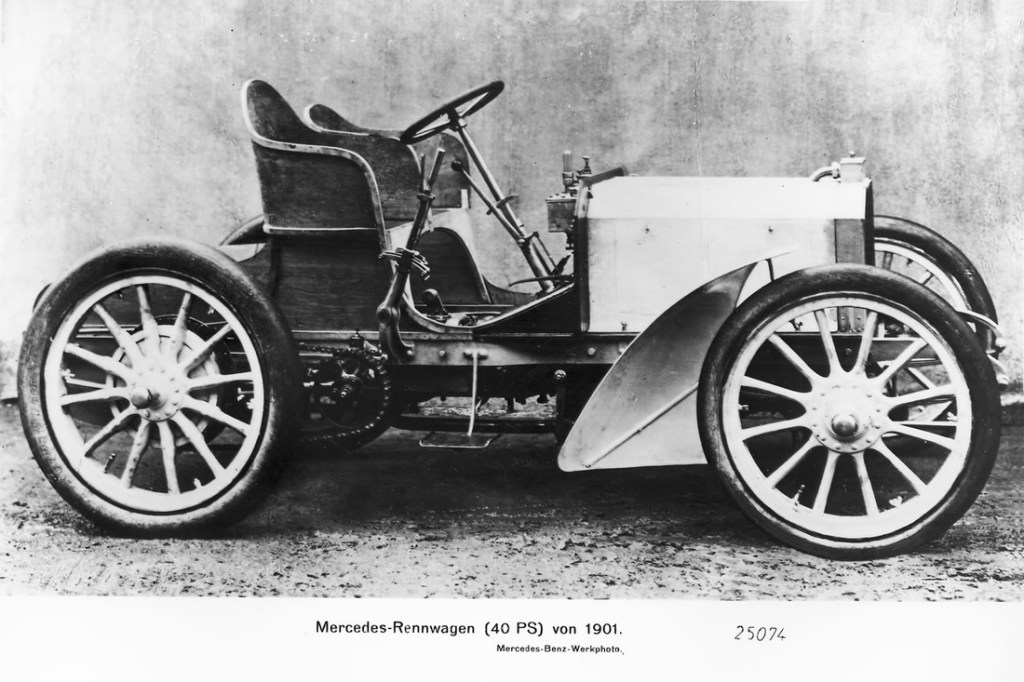
Before 1901 (cars) were just wooden horse carriages with the horses ripped off and a noisy motor slapped under the seat. They were tall, top-heavy, and easily flipped over. The 1901 Mercedes 35 hp changed everything by throwing out the carriage blueprints and inventing the modern car layout from scratch.
2. The Innovation (How It Rewrote Engineering)
Automotive pioneers Wilhelm Maybach and Paul Daimler re-engineered the vehicle with three radical upgrades:
- The Steel Chassis: Swapped heavy wood for a lightweight, pressed-steel frame.
- Low Center of Gravity: Dropped the engine low to the ground between the front wheels, making it incredibly stable around corners.
- The Front Radiator: Introduced the honeycomb radiator at the front, creating the iconic “face” of cars we still see today.
3. The Name: A Marketing Accident
The car was built for Emil Jellinek, a wealthy businessman who loved racing. He had a habit of naming his race cars after his daughter, Mercédès.
When this new 35-horsepower (Pferdestärken) machine completely crushed the competition at the 1901 Nice Week races, the public went wild. Buyers didn’t ask for a “Daimler”; they demanded “the Mercedes car.” The branding was so powerful that the company trademarked the name, eventually leading to the Mercedes-Benz empire.
4. Conclusion: The Blueprint of Today
The Mercedes 35 hp was the exact pivot point where automobiles stopped being “horseless carriages” and became true, high-performance sports cars. Every modern sedan and supercar on the road today still uses the basic architecture invented for this exact vehicle.